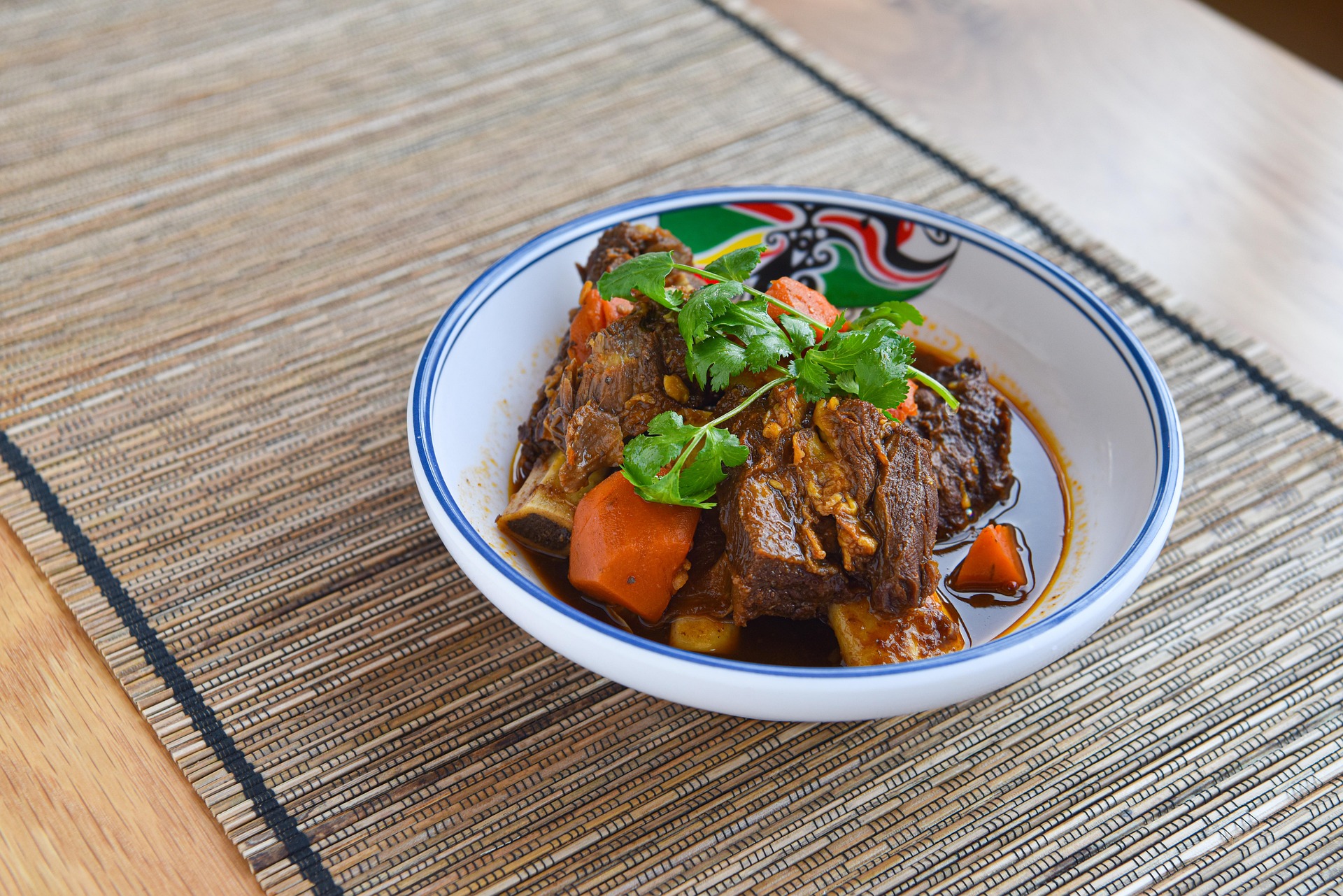
If there is one dish that represents the absolute soul of French comfort food, it is Beef Bourguignon (Boeuf Bourguignon). Originating from the Burgundy region of France—famous for its world-class pinot noir and exceptional cattle—this humble peasant stew has somehow found its way onto the menus of the world’s finest Michelin-starred restaurants.
The first time I attempted to make this at home, I treated it like a regular weeknight beef stew. I threw everything into a pot, dumped in a box of cheap cooking wine, and let it simmer on the stove for an hour. The result? A watery, sour disaster with tough, rubbery chunks of meat swimming in a sad, thin broth. I was ready to write the recipe off as an overhyped French myth.
Then, I picked up Julia Child’s legendary cookbook and spent an entire weekend diving deep into the chemistry of braising. I realized my mistakes: I hadn’t seared the meat properly, I used terrible wine, and I rushed a process that demands time.
Beef Bourguignon is not difficult, but it demands respect, patience, and a few fundamental French culinary techniques. Today, I am going to walk you through how to transform tough cuts of beef into melt-in-your-mouth perfection right in your own kitchen.
The Pillars of a Great Bourguignon
You cannot cut corners with this dish because every single ingredient plays a starring role in building the flavor profile of the sauce.
1. The Beef: Chuck Roast is King
Never use lean cuts like sirloin or tenderloin for a stew; they will dry out and turn into shoe leather after hours of cooking. You need a cut rich in connective tissue and intramuscular fat—ideally beef chuck roast (or blade roast). As the meat simmers gently for hours, the collagen melts down into gelatin, creating a velvety, luxurious mouthfeel and making the beef remarkably tender. Cut the meat into generous, uniform chunks (about 2 inches thick) so they don’t disintegrate during the long braise.
2. The Wine: Drink What You Cook
There is an old kitchen rule that applies here more than anywhere else: Never cook with a wine you wouldn’t drink by the glass. You do not need to splurge on a ridiculously expensive grand cru, but please avoid “cooking wine” from the supermarket condiment aisle, which is loaded with sodium and preservatives. Choose a dry red wine—traditionally a Pinot Noir from Burgundy, but a good Cabernet Sauvignon or Merlot will also work beautifully to provide that deep, fruity acidity.
3. The Bacon Base (Lardons)
Authentic Bourguignon starts by rendering the fat from thick-cut bacon (lardons). This smoky pork fat becomes the foundation in which you will sear your beef and sauté your vegetables, building layers of flavor from the very bottom of the pot.
The Technique: Building Flavor Step-by-Step
Braising is a two-part cooking method: a high-heat sear followed by a low-and-slow simmer in liquid. Here is how to execute it flawlessly.
Step 1: The Maillard Reaction (The Sear)
This is where most home cooks fail. You must sear the beef chunks until they develop a deeply browned, caramelized crust. This process, known as the Maillard reaction, creates hundreds of new flavor compounds that will eventually dissolve into your stew.
- The Secret: Moisture is the enemy of browning. You must pat your beef chunks completely dry with paper towels before they hit the hot oil. Furthermore, do not crowd the pan! If you put all the meat in at once, the temperature of the pan will drop, and the beef will steam in its own juices instead of browning. Sear the meat in small batches, taking the time to brown all sides.
Step 2: The Fond and The Deglaze
After you have seared the beef and cooked your aromatic vegetables (carrots, onions, and garlic) in the remaining fat, look at the bottom of your heavy-bottomed pot (preferably a Dutch oven). You will see a sticky, dark brown residue. This is called the fond, and it is pure, concentrated flavor.
Pour in a splash of your red wine and use a wooden spoon to scrape every last bit of that fond off the bottom of the pot. This is called deglazing.
Step 3: The Slow Braise
Return the beef to the pot, sprinkle lightly with flour (to help thicken the sauce later), and pour in the rest of the wine along with some high-quality beef stock. Toss in a bouquet garni (a bundle of fresh thyme, parsley stems, and a bay leaf).
Bring the pot to a gentle simmer, put the lid on, and transfer it to a preheated oven at 325°F (160°C). Why the oven and not the stovetop? The oven provides gentle, multidirectional heat, preventing the bottom from scorching and allowing the liquid to maintain a bare, lazy simmer. Leave it there for about 2.5 to 3 hours.
Step 4: The Separation of Vegetables
Here is a secret from professional kitchens: the vegetables you braise with the meat are mainly there to flavor the sauce; by the time the meat is tender, those vegetables are mushy and exhausted.
While the beef is in the oven, prepare your garnishes separately. Sauté fresh button mushrooms in butter until golden brown. In a separate pan, brown-braise small pearl onions in a little beef stock and butter until they are sweet and tender. When the beef is done, fold these fresh, perfectly cooked garnishes into the stew.
The Final Reward
When you pull the heavy pot out of the oven, the entire house will smell like a rustic French countryside. The sauce should be glossy, dark, and thick enough to coat the back of a spoon. The beef will be so tender you can cut it with a fork.
Serve it over a bed of creamy mashed potatoes or alongside some crusty French baguette to mop up every last drop of that incredible sauce.
Beef Bourguignon is not a quick 30-minute meal. It is a weekend project, an act of culinary love, and a masterclass in the patience required to turn simple ingredients into something extraordinary. Bon appétit!