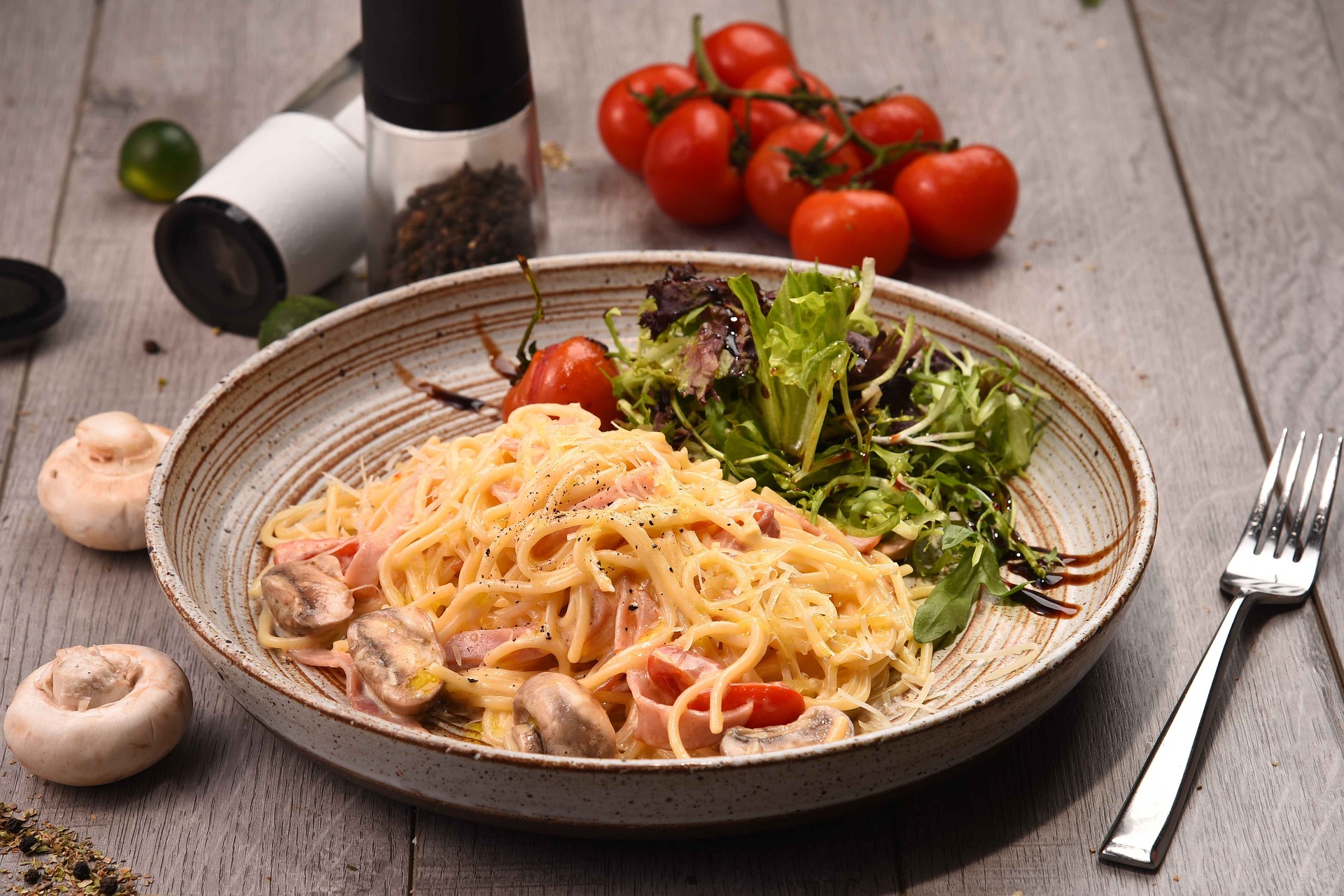
If you walk into a standard, non-Italian restaurant anywhere in the world and order a plate of Spaghetti Carbonara, there is a ninety percent chance you will be served a bowl of pasta drowning in a thick, gloopy pool of heavy cream. For years, I thought that was exactly what Carbonara was supposed to be: a heavy, dairy-laden dish that tastes delicious for the first three bites, but leaves you feeling uncomfortably stuffed by the time you reach the bottom of the bowl.
Then, I went to Rome.
On a rainy Tuesday evening, tucked away in a tiny, family-run trattoria in the Trastevere neighborhood, my entire culinary worldview was flipped upside down. The waiter brought out a plate of golden, glossy spaghetti. There was no pool of white sauce at the bottom. Instead, each strand of pasta was coated in a rich, velvety emulsion that tasted intensely of sharp sheep’s cheese, savory pork fat, and a sharp, biting kick of black pepper.
When I asked the chef for his secret, he looked at me with a mix of pride and mild offense. “Cream?” he scoffed. “In Carbonara, we use five things. Pasta, pork, cheese, egg, and pepper. The cream is an insult.”
Since that trip, I’ve ruined countless batches trying to recreate that magic in my own kitchen. I’ve made scrambled egg pasta. I’ve made watery, flavorless noodles. But through trial, error, and a lot of patience, I finally unlocked the secret. Today, I’m going to share with you the true, authentic Roman method. It’s less about a strict recipe, and entirely about technique.
The Holy Trinity (Plus Two) of Ingredients
Authentic Carbonara is a testament to Italian minimalism. Because there are only five ingredients, there is absolutely nowhere to hide. You cannot substitute your way to a perfect Carbonara.
1. The Pork: Guanciale
Please, put the supermarket smoked bacon down. American bacon is heavily smoked and cured with sugar, which will completely overpower the delicate balance of the dish. The Romans use Guanciale—cured pork jowl (cheek). It has a higher fat-to-meat ratio, and that fat is packed with a deep, funky, savory flavor. When rendered down, it becomes liquid gold. If you absolutely cannot find Guanciale at your local deli, Pancetta (cured pork belly) is an acceptable runner-up.
2. The Cheese: Pecorino Romano
Forget the pre-grated parmesan in the plastic shaker. You need a block of Pecorino Romano. This is a hard, salty cheese made from sheep’s milk. It has a sharp, slightly gamey bite that cuts through the richness of the egg yolk. I highly recommend buying a block and grating it yourself as finely as possible. Pre-grated cheeses are coated in anti-caking agents (like cellulose) which will prevent your sauce from melting into a smooth cream. If Pecorino is too sharp for your palate, a 50/50 blend of Pecorino and high-quality Parmigiano-Reggiano is a beautiful compromise.
3. The Eggs: The Golden Ratio
The sauce is made of eggs, but we want richness, not a breakfast scramble. The secret is to use more yolks than whole eggs. For two people, my golden ratio is 1 whole egg and 3 additional egg yolks. This guarantees a sauce that is deeply yellow, incredibly rich, and perfectly thick.
4. The Black Pepper
The name “Carbonara” is widely believed to come from the carbonari (coal miners) of Italy. The black pepper is meant to resemble coal dust falling onto the plate. Do not use pre-ground pepper. You must use whole black peppercorns, toasted lightly in a dry pan to release their essential oils, and then crushed freshly in a mortar or a grinder. It provides the crucial heat that cuts through the fat.
5. The Pasta
Spaghetti is traditional, though Rigatoni is also highly respected in Rome. Whatever shape you choose, make sure it is dried, bronze-die extruded pasta (often labeled al bronzo). The bronze dies give the pasta a rough, chalky texture that grips the sauce perfectly.
The Art of Emulsion: Cooking the Carbonara
This is where the magic happens. We are going to use the residual heat of the pasta and a splash of starchy pasta water to gently cook the eggs into a custard-like sauce, without scrambling them.
Step 1: Prep the Paste
In a medium bowl, combine your 3 egg yolks, 1 whole egg, and a very generous mountain of finely grated Pecorino Romano. Add a heavy pinch of your freshly cracked black pepper. Whisk this together vigorously until it forms a thick, yellowish paste. Set it aside.
Step 2: Render the Fat
Slice your Guanciale into thick strips (about 1/4 inch thick). Place them into a cold skillet, and turn the heat to medium-low. Do not add oil! We want to render the fat out slowly. This takes about 10 to 15 minutes. You want the Guanciale to become crispy on the edges but retain a slight chew in the center. Once it’s perfect, use a slotted spoon to remove the meat, leaving all that glorious, clear liquid fat in the pan. Turn off the heat.
Step 3: Boil the Pasta (And Save the Water!)
Bring a large pot of water to a rolling boil. Salt it until it tastes like the sea. Drop in your spaghetti. Crucial rule: Do not add olive oil to your pasta water; it will coat the noodles and make the sauce slide right off. Boil the pasta for about 1 minute less than the package instructions so it remains perfectly al dente (firm to the bite).
Before you drain the pasta, scoop out a large mug of the starchy pasta water. This water is the glue that brings the whole dish together.
Step 4: The Mantecatura (The Danger Zone)
Transfer your hot, drained pasta directly into the skillet with the rendered pork fat. Toss it vigorously so every strand is coated in the fat.
Now, make sure the pan is completely off the heat. If your pan is too hot, the eggs will scramble instantly. If you are using a heavy cast-iron pan that holds a lot of heat, you might even want to transfer the pasta to a separate large glass mixing bowl for this next step.
Pour your egg and cheese paste over the pasta. Immediately begin tossing and stirring the pasta rapidly with tongs. Add a small splash of the hot pasta water. The friction of your tossing, combined with the hot starch from the water and the melted pork fat, will gently cook the egg yolks, emulsifying them into a thick, glossy cream. Keep tossing for a full minute. If it looks too thick or sticky, add another splash of pasta water and keep tossing until it looks like it’s coated in heavy cream.
Step 5: Plating and Serving
Twirl the pasta onto warm plates. Take the crispy Guanciale you set aside earlier and scatter it generously over the top. Finish with one final grating of Pecorino Romano and another aggressive dusting of black pepper.
Eat it immediately. Carbonara waits for no one.
Once you master this technique, you will understand the profound beauty of Italian cooking. It is about taking a few humble ingredients and treating them with the utmost respect. Say goodbye to heavy cream, and welcome to the real Rome.