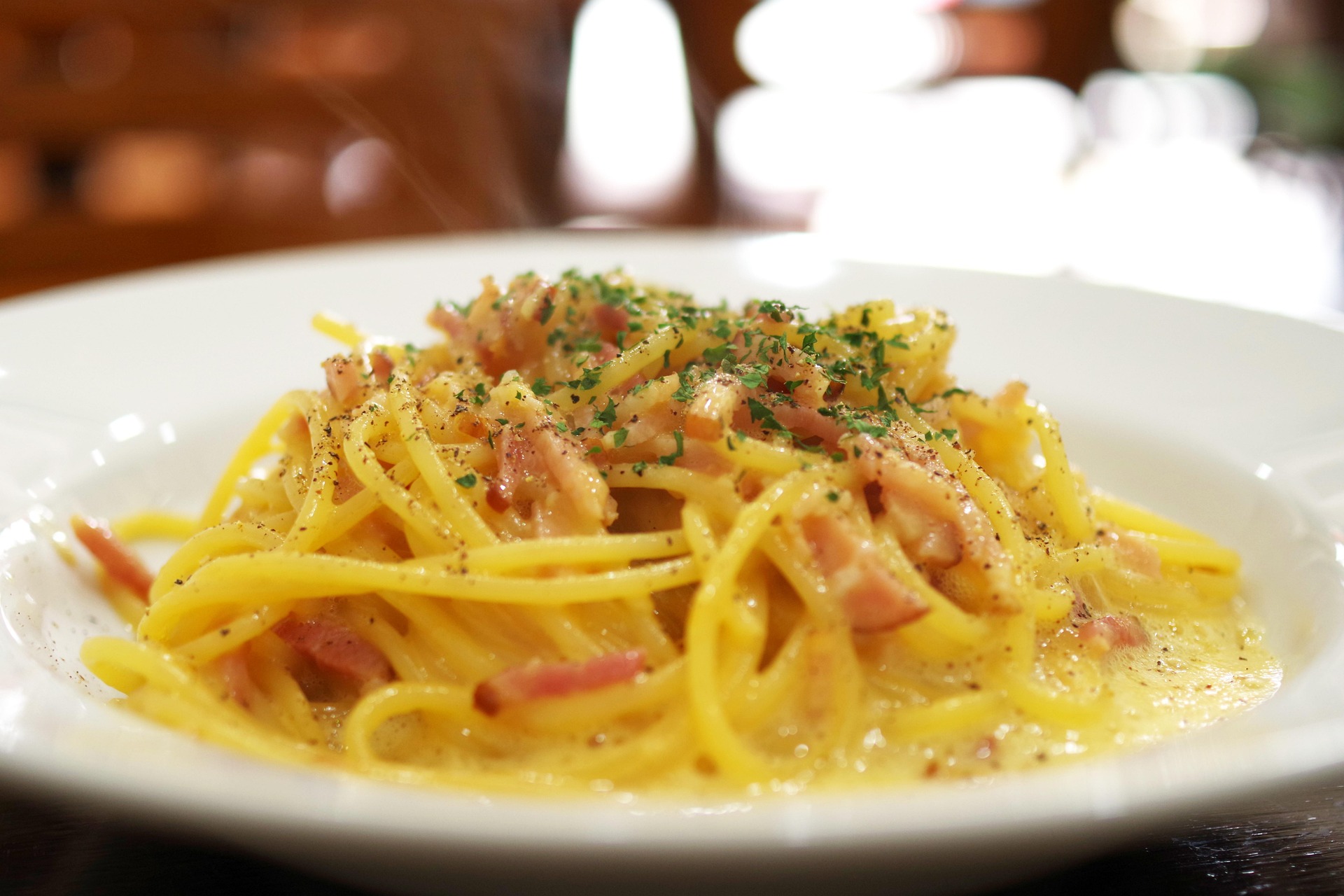
If you are currently standing in your kitchen pouring a carton of heavy cream into a pan of pasta and calling it Carbonara, I need you to step away from the stove. You are not making Carbonara. You are making macaroni and cheese with a bacon problem.
Outside of Rome, Spaghetti Carbonara is arguably the most misunderstood and abused dish in the global culinary repertoire. Somewhere along the line, restaurants decided that the only way to achieve a rich, creamy sauce was to dump actual cream into the pan. They added garlic, tossed in handfuls of frozen peas, and swapped traditional cured pork for smoky breakfast bacon. The result is a heavy, cloying, dairy-laden mess that sits in your stomach like a concrete block.
True Roman Carbonara is an exercise in absolute, uncompromising restraint. It contains exactly four ingredients: cured pork, sheep’s milk cheese, eggs, and black pepper. There is no garlic. There is no butter. There is absolutely no cream.
The velvety, glossy, luxurious sauce that coats the noodles in a proper Carbonara is not a dairy product. It is a scientific magic trick. It is a temporary, highly fragile emulsion created by violently forcing liquid animal fat to bond with starchy pasta water and egg yolks. Today, we are going to learn the alchemy of this ancient Roman dish, and we are going to banish the heavy cream forever.
The Foundation of Fat: Guanciale vs. The World
You cannot make authentic Carbonara with American smoked bacon. Bacon is cured with sugar and heavily smoked over wood chips. If you use it, your pasta will taste like a campfire breakfast. Pancetta (cured pork belly) is a tolerable substitute in an emergency, but to achieve perfection, you must source the king of Roman salumi: Guanciale.
Guanciale is cured pork jowl (the cheek of the pig). It is not smoked. It is rubbed aggressively with salt, black pepper, and sometimes garlic or rosemary, and left to age for months. The fat on a pig’s cheek is fundamentally different from belly fat; it is softer, richer, and melts at a lower temperature.
Cut your Guanciale into thick, meaty batons—never tiny cubes, which will burn and turn to gravel. Place the batons into a cold, dry skillet. Do not add oil. Turn the heat to medium-low. You want to slowly coax the fat out of the meat. As the pan heats, the white fat will render into a shimmering, golden liquid, and the exterior of the pork will fry in its own grease until it becomes a crispy, shattered glass-like shell with a chewy center.
Once the Guanciale is perfectly crisp, remove the meat from the pan, but leave every single drop of that liquid golden fat. That rendered pork fat is the entire base of your sauce.
The Cheese and The Egg: The Binder
While your pork is rendering, you must prepare the binder. Do not use pre-grated Parmesan cheese from a plastic tub. Parmesan is made from cow’s milk and is often too sweet and mellow for this dish.
You must use Pecorino Romano. It is a hard, aged cheese made from sheep’s milk. It is intensely salty, sharp, and slightly funky. Its aggressive flavor profile is specifically designed to cut through the heavy richness of the pork fat. Grate a massive mountain of Pecorino on the finest side of your grater until it resembles fluffy snow.
In a glass mixing bowl, whisk together fresh egg yolks (use a ratio of one whole egg plus two extra yolks for every half-pound of pasta). Dump your mountain of grated Pecorino into the eggs and whisk them together until you form a thick, yellow paste. It will look alarmingly dry and clumpy. Do not panic.
The Catalyst: Bronze-Die Pasta and Liquid Gold
You cannot use cheap, smooth pasta for Carbonara. You must buy pasta extruded through bronze dies (it will usually say “al bronzo” on the package). Bronze dies leave a rough, microscopic sandpaper-like texture on the surface of the pasta, which acts like a sponge, allowing the sauce to physically grip the noodle.
Boil your spaghetti in heavily salted water. But here is the secret: use half the amount of water you normally would. By boiling the pasta in less water, you concentrate the starch that leaches out of the noodles. This murky, cloudy pasta water is your liquid gold. It is the catalyst that will force the fat and the eggs to combine.
The Danger Zone: The Art of Emulsification
This is where Carbonara is made or ruined. If you expose eggs to direct, high heat, they will instantly scramble. You will end up with breakfast noodles.
When your pasta is two minutes away from being perfectly al dente, use tongs to transfer the noodles directly from the boiling water into the skillet with your reserved, warm pork fat. Do not throw the pasta water away! Toss the noodles in the fat until they are completely coated and glossy.
Now, remove the skillet from the heat completely. Let the pan cool for 60 seconds. You are stepping into the danger zone.
Add one ladle of the hot, starchy pasta water into your bowl of egg and cheese paste. Whisk it frantically. The hot water will temper the eggs, gently raising their temperature without scrambling them, and melt the cheese into a smooth, loose cream.
Pour this tempered egg mixture directly over the pasta in the skillet. Now, you must move with speed and violence. Toss the pasta continuously, stirring aggressively. Add another splash of hot pasta water.
As you toss, the friction, the residual heat of the pan, the starchy water, and the liquid pork fat will collide. The starch acts as an emulsifier, forcing the fat molecules to bind with the water and the egg yolks. Right before your eyes, the watery liquid in the bottom of the pan will suddenly transform into a thick, glossy, custard-like sauce that coats every single strand of spaghetti perfectly.
The Final Touch: The Coal Miner’s Spice
Carbonara is said to be named after the carbonai—the coal miners of the Apennine mountains. The dish must look as though coal dust has been showered over it.
Take a heavy pepper mill and grind a seemingly irresponsible amount of black pepper directly into the pan. Toss it one last time. Fold the crispy batons of Guanciale back into the pasta, reserving a few to place on top.
Serve it immediately in warm bowls. Do not wait for your guests to sit down; they must wait for the pasta. When you twirl that heavy forkful, the sauce should be rich, sharply salty, and intensely peppery, with the fatty crunch of the pork cutting through the velvet texture. You have created a masterclass in culinary physics, using just four ingredients. And you didn’t need a single drop of cream to do it.