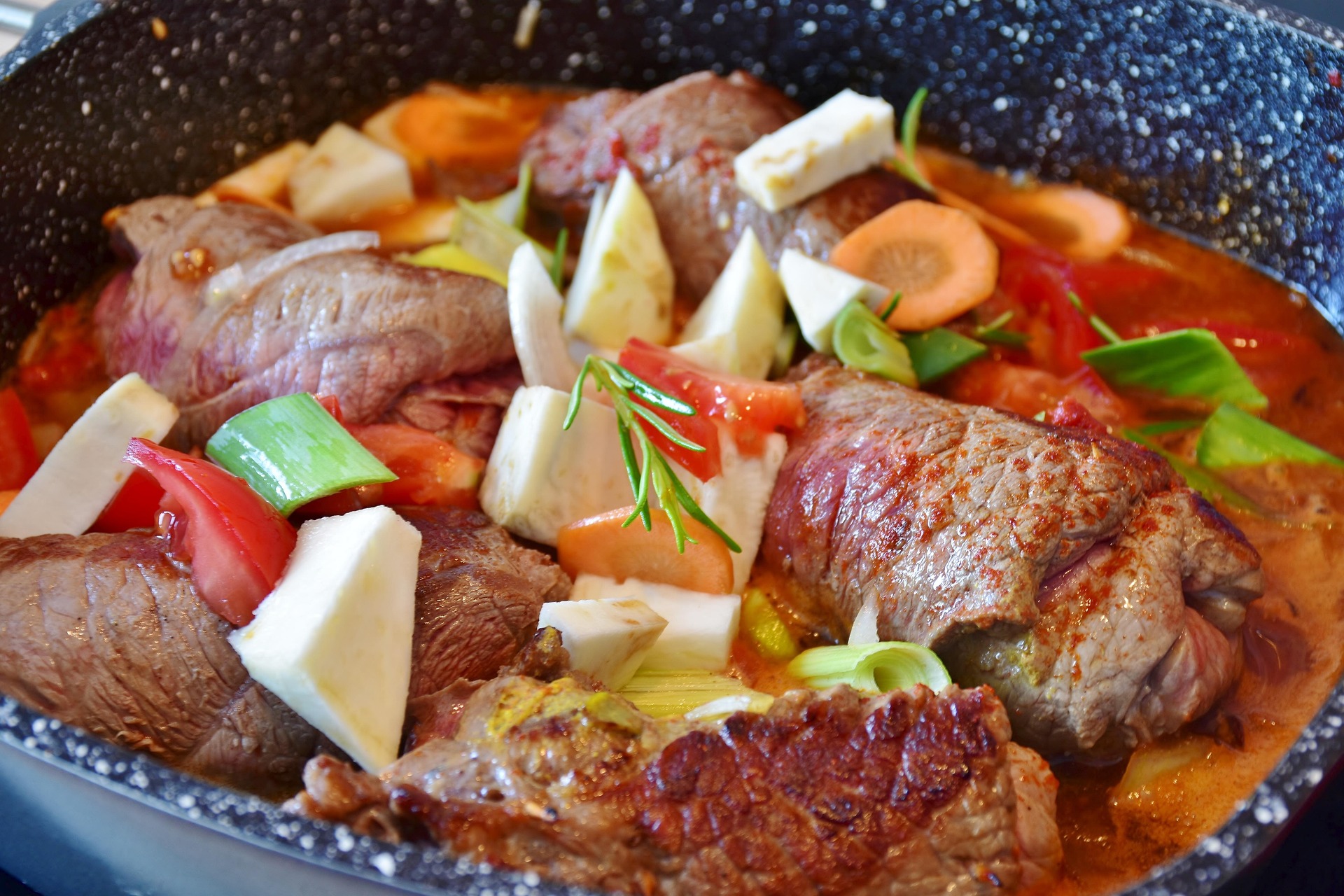
If you mention French cuisine to most people, they immediately picture pristine white tablecloths, tweezers carefully arranging micro-greens, and delicate sauces that take three days to clarify. But the true soul of French cooking does not live in Michelin-starred dining rooms in Paris. It lives in the rustic, freezing farmhouses of the countryside. And no dish represents this profound, earth-shattering comfort better than Beef Bourguignon.
Made globally famous by Julia Child, this iconic stew from the Burgundy region is often misunderstood. Home cooks read the recipe, see the long list of ingredients, and panic. They try to rush the process, boiling the meat aggressively, dumping all the vegetables into the pot at once, and pouring in cheap “cooking wine.” The result is a pot of stringy, grey meat floating in a sharp, purple liquid alongside mushy vegetables. It is a tragedy.
Authentic Beef Bourguignon is not just a stew. It is a controlled scientific experiment. It is the slow, deliberate breakdown of tough connective tissues into liquid gold, using heat, time, and the acidity of a good Pinot Noir. Today, we are going to deconstruct this peasant classic, fix the fatal errors, and engineer a stew so deeply rich and gelatinous that it will coat the back of a spoon and haunt your dreams.
The Anatomy of the Beef: Embrace the Ugly Cuts
The first rule of Beef Bourguignon is that you must never, under any circumstances, buy expensive, lean cuts of beef. If you use tenderloin, sirloin, or a beautiful ribeye, your stew will be a spectacular failure. Lean meat has no connective tissue; if you braise it for three hours, it will turn into dry, unswallowable sawdust.
You need the hard-working muscles of the cow. You need the chuck roast, the brisket, or the ox cheek. These cuts are cheap, ugly, and riddled with tough, rubbery white streaks of collagen. When subjected to low, slow heat, that tough collagen undergoes a chemical miracle: it melts, transforming into rich, lip-smacking gelatin. This gelatin is what gives the sauce its glossy, luxurious body and keeps the meat incredibly moist. Cut your beef into massive, two-inch chunks. If you cut them too small, they will disintegrate into the sauce.
The Searing Protocol: The Maillard Mandate
Before a drop of liquid enters your heavy Dutch oven, you must build the foundation of flavor. This begins with bacon—specifically, thick-cut lardons. You render the fat from the pork over low heat until the bacon is crispy and the bottom of your pot is coated in shimmering, smoky liquid fat. Remove the bacon and leave the fat.
Now comes the most critical step: searing the beef. You must dry the beef chunks thoroughly with paper towels. If they are wet, they will steam. Drop the beef into the screaming hot bacon fat.
Here is where 90% of home cooks fail: they crowd the pan. If you put all the meat in at once, the temperature of the metal drops, the meat releases its juices, and suddenly you are boiling your beef in a grey puddle. You must sear the beef in small batches. Leave inches of space between each piece. Let them sizzle violently until a dark, mahogany-brown crust forms on all sides. This is the Maillard reaction—the browning of amino acids and sugars—and it is the only way to introduce deep, roasted complexity into your final sauce.
The Braise: Blood of the Earth
Once the meat is deeply browned and removed, your pot will look like a disaster. The bottom will be coated in a burned, sticky black substance. Do not wash the pot. That sticky layer is called the fond, and it is pure, concentrated culinary magic.
Toss in your chopped carrots and onions, letting them sweat and absorb the beef fat. Add a heavy tablespoon of tomato paste and a handful of flour, cooking it out for a minute to create a roux that will thicken the stew.
Now, you deglaze. You must pour in a full bottle of red wine. It does not need to be a $50 bottle, but it must be a wine you would actually drink in a glass. The traditional choice is a dry Pinot Noir from Burgundy. As the wine hits the hot pan, it will boil furiously. Scrape the bottom of the pot with a wooden spoon, lifting all that dark, sticky fond into the liquid.
Return the beef and the bacon to the pot. Add a bouquet garni (a tied bundle of fresh thyme, parsley stems, and bay leaves), and pour in enough high-quality beef stock just to cover the meat. Bring it to a gentle simmer, cover it with a heavy lid, and put it into a low oven (325°F / 160°C). Do not boil it on the stove. A hard boil will violently squeeze the moisture out of the meat fibers. You want a lazy, slow simmer. Leave it completely alone for three hours.
The Garnish Fallacy: Protecting the Mushrooms and Onions
While the beef is braising, we must address the vegetables. The classic recipe calls for whole pearl onions and quartered brown mushrooms. The single biggest mistake you can make is throwing them into the main pot to cook with the beef for three hours. If you do this, they will turn into flavorless, mushy sponges that dissolve in your mouth.
The vegetables in a Bourguignon are not a built-in side dish; they are a deliberate, textural garnish. You must cook them separately.
Sauté the quartered mushrooms in a screaming hot skillet with butter until they are deeply browned and release their earthy aroma. In another pan, gently braise the peeled pearl onions in a little beef stock and butter until they are tender and glazed. You will fold these perfectly cooked, structurally sound vegetables into the stew only during the final fifteen minutes of cooking. This provides bursts of distinct texture against the meltingly soft beef.
The Overnight Rule
When the three hours are up, pull the pot from the oven. The liquid should be dark, thick, and intensely aromatic. The beef should yield completely to the gentle press of a fork.
But you are not going to eat it. Not yet.
Like all great braises, Beef Bourguignon is fundamentally better on the second day. When you let it cool and rest in the refrigerator overnight, the gelatin sets, the harsh tannins of the wine mellow, and the flavors compound and marry in a way that science still struggles to fully explain.
The next evening, gently reheat it on the stove. Serve it ladled generously over a mountain of buttery, smooth potato purée or alongside a torn loaf of crusty French baguette to mop up the sauce. When you taste that profound, wine-dark richness, you will understand why this humble peasant stew conquered the culinary world.