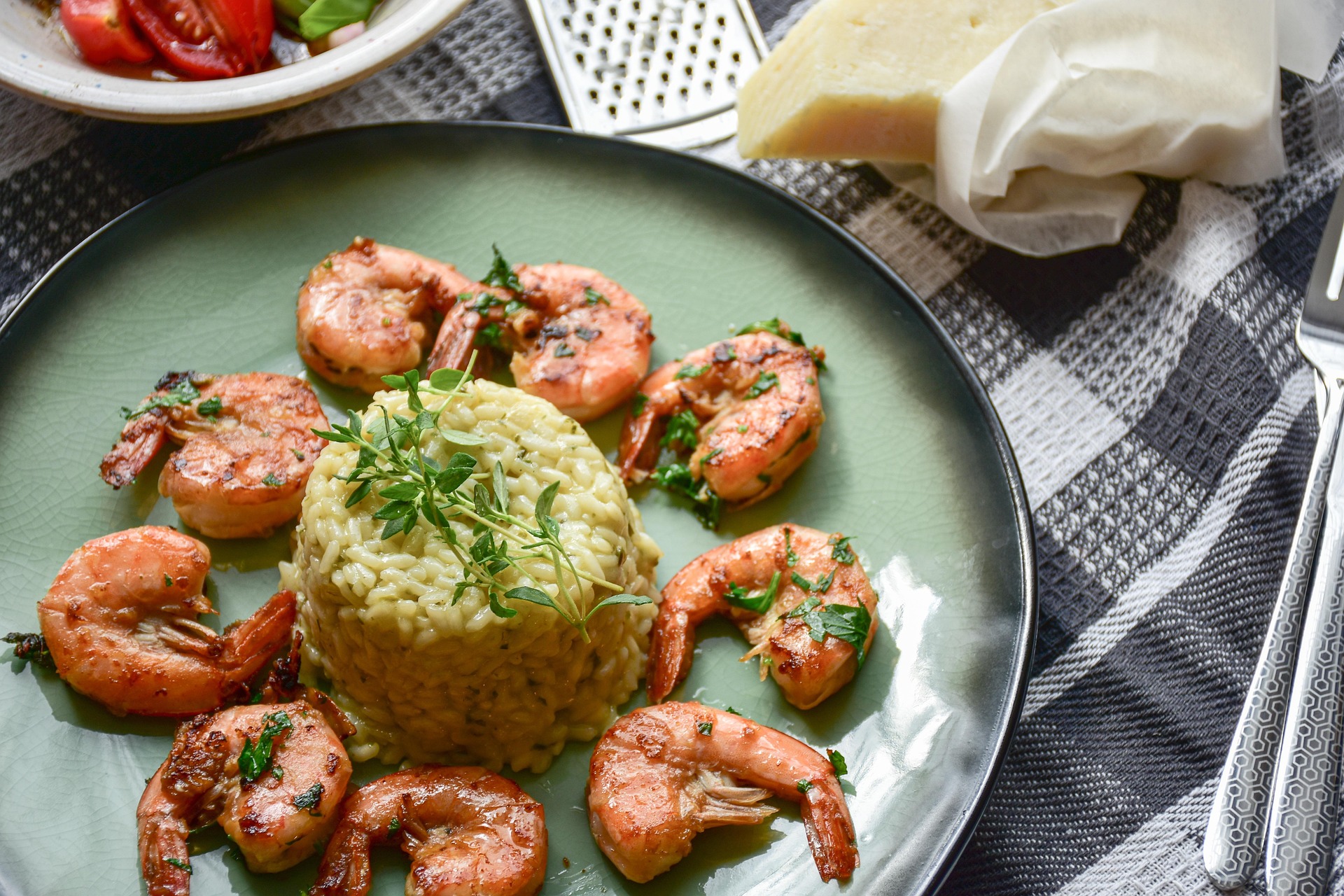
If you order Risotto in a mediocre restaurant, you will usually be served one of two disasters. The first is a stiff, heavy mound of rice that holds its shape on the plate like a sandcastle, glued together by a cloying amount of heavy cream. The second is a watery, broken soup where overcooked grains float sadly in a pool of separated chicken broth.
Neither of these is Risotto. True Italian Risotto—specifically the glowing, golden Risotto alla Milanese—is not a static pile of rice. It is a dynamic, fluid emulsion. A proper Risotto must have the all’onda (on the wave) texture; when you tilt the warm plate, the rice should flow slowly and elegantly like volcanic lava. It should be rich, incredibly creamy, and glossy, yet the center of every single grain must retain a distinct, chewy bite.
Achieving this suspension requires no heavy cream, no flour, and no shortcuts. It is a masterclass in starch extraction and thermal manipulation. Today, we are going to learn how to aggressively coax the starch out of the rice grain and engineer the perfect, flowing emulsion.
The Grain Hierarchy: Why You Should Abandon Arborio
The single biggest mistake home cooks make is buying the wrong rice. Most international supermarkets only carry Arborio. While Arborio is technically a risotto rice, it is highly unforgiving. It absorbs liquid rapidly, but its structural integrity is weak; it goes from perfectly cooked to mush in a matter of seconds.
You must seek out Carnaroli or Vialone Nano. Carnaroli is the undisputed king of Italian rice. It has a higher starch content (specifically the soluble starch called amylopectin, which creates the creamy sauce) and a much firmer internal structure. It can withstand twenty minutes of constant, aggressive stirring without shattering.
And here is the absolute, unbreakable rule of Risotto: you must never, under any circumstances, wash the rice. If you rinse the rice under the tap, you wash away all the surface amylopectin starch down the drain. You are literally washing away your sauce. The rice goes from the box directly into the pan.
The Tostatura: Sealing the Shell
You do not begin by boiling the rice. You begin with the Tostatura—the roasting of the dry grain. In a wide, heavy-bottomed pan, melt a small amount of butter (or traditionally, beef marrow) and sweat your finely minced shallots until they are translucent.
Now, dump in your dry, unwashed Carnaroli rice. Turn the heat to medium-high. You must toast the raw grains in the hot fat for three to four minutes. You are lightly frying the exterior of the grain, creating a microscopic, protective shell around the rice. If you skip the Tostatura and just pour liquid over raw rice, the grains will instantly turn into porridge. The toasting ensures that while the outside releases starch, the inside remains dense and chewy.
When the edges of the rice grains turn translucent and the center remains stark white, you deglaze with a glass of dry, acidic white wine. The pan will hiss violently. Stir until the sharp smell of alcohol completely evaporates.
The Agitation Protocol: The Physics of Friction
Now begins the labor. You must have a separate pot of high-quality broth sitting on the stove next to your rice, and it must be simmering hot. If you add cold broth to the hot rice, you will shock the grain, drop the temperature of the pan, and ruin the cooking process.
Add the hot broth to the rice one ladle at a time. Do not drown the rice; the liquid should just barely cover the grains. Now, you stir. You do not stir just to prevent burning; you stir to create friction. As you agitate the rice with a wooden spoon, the grains physically violently rub against each other. This mechanical friction physically scrapes the sticky amylopectin starch off the surface of the grains and into the simmering liquid.
As the liquid reduces and thickens with starch, you add another ladle of hot broth. You repeat this rhythmic, hypnotic process for about sixteen minutes. Halfway through, you add your saffron threads that have been steeping in warm broth. The entire pan will instantly bloom into a brilliant, radioactive gold, and the haunting, earthy, floral aroma of the saffron will fill the kitchen.
The Danger Zone: The Bite
At the fifteen-minute mark, you must start tasting. You are looking for a highly specific texture. The rice must be tender on the outside, but when you bite down, you should feel a distinct, slightly firm pinpoint of resistance in the very center. The Italians call this the anima (the soul) of the grain. If the rice is completely soft all the way through, you have failed.
When the rice hits that perfect al dente stage, and the liquid in the pan is thick and bubbling like wet cement, turn the heat off completely. Pull the pan off the stove.
The Magic of Mantecatura: The Final Emulsion
This is the most critical sixty seconds in the life of your Risotto. You cannot serve it yet. You must perform the Mantecatura—the final, aggressive mounting of the fat.
Let the pan sit completely undisturbed off the heat for exactly one minute. This slight drop in temperature is crucial; if the pan is too hot, the dairy will split and turn greasy.
Now, drop in two large cubes of incredibly cold, unsalted butter and a massive handful of finely grated Parmigiano-Reggiano. You must stir violently. You shake the pan back and forth with your left hand while whipping the rice furiously with a wooden spoon in your right hand.
This violent agitation forces the cold butterfat and the melting cheese to emulsify with the starchy water left in the pan. Because the butter is cold, it melts slowly, suspending its fat droplets perfectly into the liquid rather than separating into an oil slick.
Right before your eyes, the texture will transform. It will suddenly become unimaginably glossy, thick, and velvety. It is a breathtaking chemical reaction.
Ladle the glowing golden Risotto onto a warm, flat plate. Do not mold it. Hold the plate and smack the bottom of it with the heel of your hand. The Risotto should ripple, spread out perfectly flat, and cover the entire surface of the plate in a shimmering, golden pool. That is the all’onda wave. That is culinary perfection, built entirely on starch, friction, and patience.