If you have ever wandered the streets of Mexico City after midnight, you know that the true beacon of hope is not a glowing neon sign, but a spinning vertical spit of bright red pork. The trompo.
Standing on the sidewalk, you watch the taquero work with mesmerizing precision. He spins the towering cone of meat, slicing off impossibly thin, charred ribbons of pork that fall directly into a warm corn tortilla. With a flick of his wrist, he catches a slice of roasted pineapple flying through the air, garnishes the taco with a flurry of diced onions and cilantro, and hands it to you. It is smoky, sweet, spicy, and perfectly caramelized. It is Tacos Al Pastor, and it is arguably the greatest taco on earth.
For a long time, I believed Al Pastor was a restaurant-only luxury. Without a massive, roaring vertical rotisserie, how could I possibly replicate those crispy, deeply marinated edges and the juicy interior? My early home attempts were tragic. I tried cutting pork into cubes, marinating them, and cooking them in a frying pan. The result was steamed, grey, rubbery meat that tasted vaguely like chili powder.
But after dissecting the techniques of Mexican street vendors and applying some home-kitchen engineering, I finally cracked the code. You don’t need a $500 commercial spit to make authentic Al Pastor. You just need a pineapple, a wooden skewer, and your oven.
Let’s break down the ultimate homemade Al Pastor.
1. The Adobo: The Soul of the Pastor
The iconic brick-red color and complex flavor of Al Pastor come from a rich, earthy marinade called adobo. Do not buy pre-made taco seasoning. The magic lies in real, dried Mexican chilies and a special paste.
- The Chilies: You need a combination of dried chilies. Guajillo chilies provide that vibrant red color and a mild, fruity sweetness. Ancho chilies bring a deep, raisin-like earthiness. Because we are cooking in a home oven and missing the charcoal smoke of a street cart, I always add one or two canned Chipotle peppers in adobo sauce. The chipotle acts as a cheat code, injecting a powerful layer of smokiness into the meat.
- Achiote Paste: Made from ground annatto seeds, this paste is essential for the traditional color and a subtle, peppery flavor.
- The Pineapple Science: We blend the chilies, achiote, garlic, oregano, cumin, and a splash of vinegar with fresh pineapple juice. A critical warning: Fresh pineapple contains an enzyme called bromelain, which breaks down meat proteins incredibly fast. If you leave the pork in a fresh pineapple marinade overnight, the meat will turn into a mushy, chalky paste. Marinate your pork for 4 hours—no more than 6.
2. The Meat: Fat is Flavor
Pork tenderloin or pork chops will not work here. They are too lean and will dry out immediately in the oven. You need pork shoulder (also known as Boston butt).
Take your time to slice the pork shoulder as thin as humanly possible—aim for about 1/4 inch thick. If the meat is too soft to slice thinly, put it in the freezer for 45 minutes to firm it up before taking your knife to it. Toss these thin sheets of pork in your rich, red adobo sauce, massaging it in so every millimeter is coated.
3. The Trompo Hack: Oven Engineering
Since we do not have a spinning rotisserie, we are going to build a miniature, stationary trompo.
- The Base: Take a whole fresh pineapple. Cut off the bottom two inches to create a sturdy, flat base. Place this pineapple base in the center of a rimmed baking sheet lined with foil (the clean-up will be a nightmare otherwise).
- The Skewer: Take a thick wooden or metal skewer and drive it straight down into the center of the pineapple base.
- The Stacking: Now, take your marinated slices of pork and begin skewering them, stacking one on top of the other. Press the meat down tightly as you go. You are essentially building a tower of meat.
- The Crown: Once all the meat is stacked, top your meat tower with another thick slice of pineapple. This crowning pineapple will slowly roast, dripping its sweet, acidic juices down over the pork as it cooks.
Bake this majestic meat tower in a 350°F (175°C) oven for about 1.5 to 2 hours. The outside will begin to caramelize, while the tightly packed interior steams in its own rendered fat and pineapple juice, staying incredibly tender.
4. The Taquero Finish (The Maillard Reaction)
When you pull your mini-trompo out of the oven, it will look incredible, but we are missing one final, crucial texture: the crispy, charred edges.
Let the meat rest for 15 minutes. Then, using a sharp knife, shave the pork off the skewer vertically, just like they do on the streets of Mexico.
Heat a large cast-iron skillet over screaming high heat. Throw a handful of your shaved pork (along with some diced bits of the roasted pineapple) directly into the dry, hot pan. The rendered fat remaining in the meat will instantly sizzle. Toss it vigorously for just 60 to 90 seconds until the edges get beautifully charred and crispy.
5. Assembly: Keep it Simple
When you have meat this flavorful, you do not drown it in sour cream or cheddar cheese.
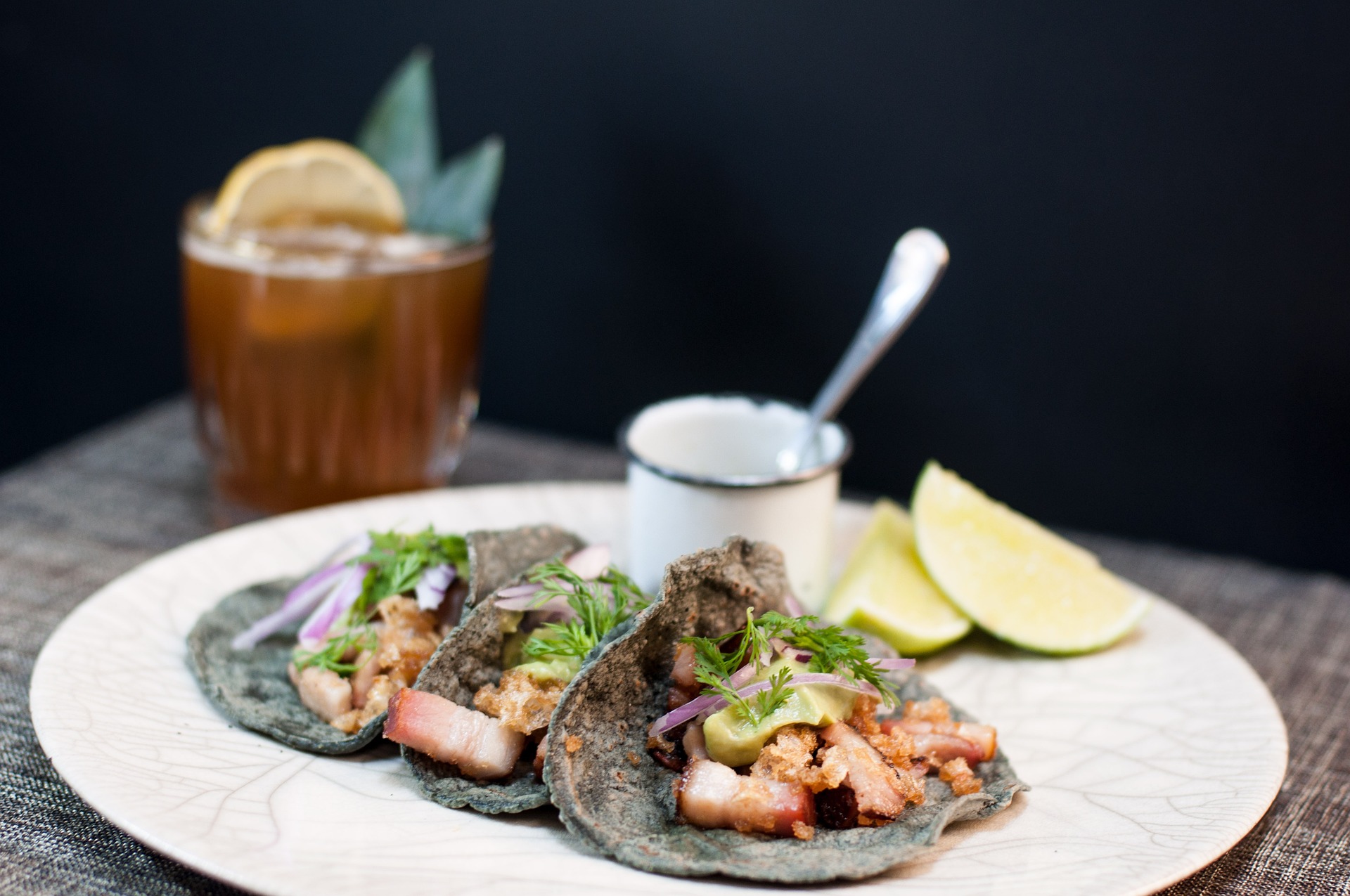
Heat your corn tortillas in a dry skillet until they are pliable and slightly blistered. Add a generous mound of your crispy, juicy Al Pastor pork. Top it with a pinch of finely diced white onions and fresh cilantro. Give it a heavy squeeze of fresh lime juice to cut through the richness of the pork, and finish with a spoonful of your favorite salsa verde.
Take a bite. Close your eyes. You are no longer in your kitchen; you are standing on a neon-lit street corner in Mexico City.