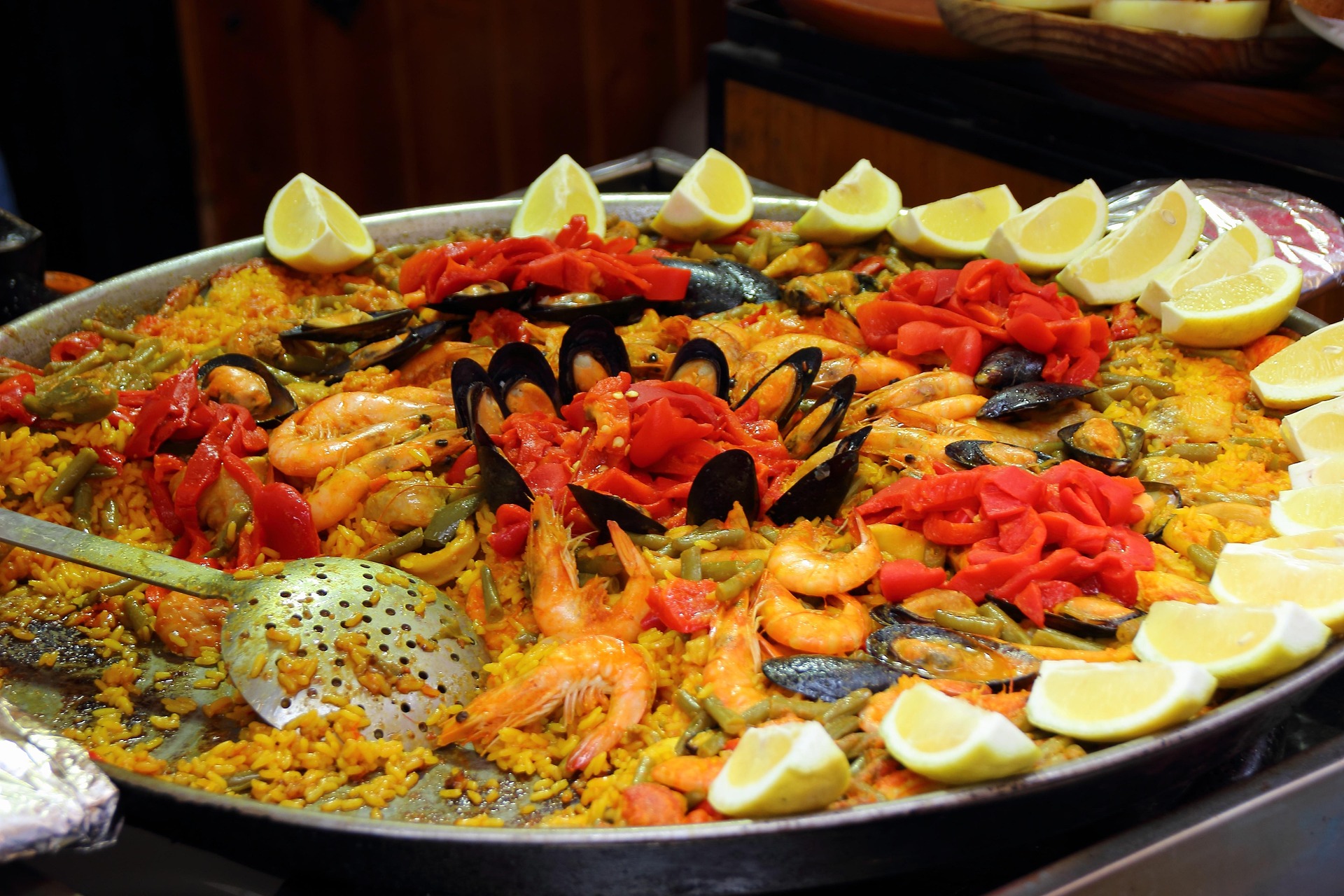
If you order a Paella in a tourist trap in Barcelona, you will likely be served a towering mountain of mushy yellow rice, overflowing with a chaotic mix of chicken, chorizo, and rubbery squid. It looks spectacular on Instagram, but to a native of Valencia—the undisputed birthplace of the dish—it is a culinary crime.
Real Spanish Paella is not a rice dish in the way that Risotto or fried rice is. It is, fundamentally, a shallow pan-frying technique disguised as a simmer. It is an exercise in restraint, geometry, and patience.
I learned this the hard way. For years, I treated Paella like a Spanish version of Risotto. I used a deep pot, poured in chicken stock, and stirred the rice obsessively, hoping for a creamy texture. I ended up with seafood porridge. It wasn’t until I stood in a smoky, open-air kitchen on the eastern coast of Spain, watching an old Valencian man tend to a massive steel pan over a wood fire, that I understood the philosophy of the dish.
Today, we are going to throw away everything you thought you knew about Paella. We are making Paella de Marisco (Seafood Paella), and we are going chasing after the holy grail of Spanish cooking: the socarrat—that glorious, caramelized, crispy crust of rice that forms at the very bottom of the pan.
The Immutable Laws of Paella
Before we even turn on the stove, you must understand the hardware and the raw materials. You cannot fake these elements.
Law #1: The Geometry of the Pan
The word “Paella” actually refers to the pan itself, not the food inside it. You absolutely cannot make this dish in a deep pot or a wok. You need a wide, shallow, flat-bottomed pan. Why? Because authentic Paella is thin. The rice should never be more than a half-inch (or one finger’s width) deep. A thin layer ensures that every single grain of rice has a chance to absorb the broth evenly and, most importantly, make contact with the bottom of the pan to form the crust. If you don’t own a traditional carbon steel paella pan, use the absolute widest, flattest skillet you have in your kitchen.
Law #2: The Liquid Gold (Broth and Saffron)
Because you are not stirring the rice, the flavor of your Paella is entirely dependent on the liquid you pour into it. Water is unacceptable. Store-bought vegetable broth is a tragedy. You must make a quick seafood stock.
Whenever you peel shrimp for this dish, save the heads and shells. Sauté them in olive oil, crush them to release their briny juices, and boil them with some fish bones, onion, and celery for 30 minutes. Strain it, and you have liquid gold.
Speaking of gold, this is where you use real saffron. Take a pinch of crimson saffron threads, toast them gently, and let them steep in a cup of your warm homemade broth. This is what gives Paella its hauntingly floral aroma and stunning sunset-yellow hue. Please, do not use cheap turmeric powder for color.
Law #3: The Rice Dictates Everything
Basmati will not work. Jasmine will turn to mush. You need a short-grain Spanish rice, ideally Bomba or Senia. Bomba rice is a biological marvel; it can absorb up to three times its volume in liquid without breaking apart or becoming sticky. It remains distinct and firm, soaking up the ocean flavors of your broth like a microscopic sponge.
The Choreography of the Cook
Now, clear your kitchen counter, pour yourself a glass of crisp Albariño wine, and let’s begin the dance.
Phase 1: Building the Sofrito and Searing the Sea
Place your wide pan over medium-high heat. Coat the bottom generously with extra virgin olive oil.
First, we sear the seafood. Toss in some large, head-on shrimp and fresh mussels. You don’t want to cook them all the way through—just sear them for two minutes to flavor the oil with their sweet, oceanic essence. Remove the seafood and set it aside.
In that same flavored oil, build your sofrito. Add finely diced onions and let them soften. Then, add grated fresh tomatoes (leave the skins behind) and a heavy pinch of sweet Spanish smoked paprika (Pimentón de la Vera). Cook this down slowly. The water from the tomatoes will evaporate, leaving you with a dark, jammy, intensely flavored paste. This is the flavor base of your entire dish. Add some cleaned, sliced squid rings into the sofrito and let them cook gently.
Phase 2: The Infusion
Once your sofrito is dark and thick, pour in your dry Bomba rice. Stir it around for two minutes so that every single grain is coated in the tomato-paprika jam and the seafood oil. It should look glossy and slightly toasted.
Now, pour in your hot, saffron-infused seafood broth. The ratio is usually 1 part Bomba rice to 3 parts broth. Gently arrange the rice into an even, flat layer across the entire surface of the pan.
Phase 3: The Ultimate Test of Patience
This is the moment that separates the amateurs from the masters.
Once the broth is in and boiling, you must put down your spoon. Step away. Do absolutely nothing.
Do not stir the rice. If you stir, you release starches, and you will end up with risotto. Let the pan bubble vigorously for the first 10 minutes. You will see the rice grains expanding, peaking through the surface of the receding liquid. Lower the heat to a gentle simmer, arrange your seared shrimp and mussels beautifully on top of the rice, and let it cook for another 8 to 10 minutes.
The Climax: Listening for the Socarrat
How do you know when it is done? You don’t look at it. You listen to it.
As the last drops of liquid evaporate, the sound coming from the pan will change. It will transition from a wet, heavy bubbling sound to a sharp, dry crackling and popping noise. That is the sound of the rice frying in the residual olive oil at the bottom of the pan.
Lean in close. You should smell an intense, toasty, roasted aroma. It should smell like perfectly browned toast, not acrid smoke. When you hear the crackle and smell the toastiness, hold your nerve for 60 more seconds, then turn off the heat completely.
The Final Rest
Do not eat it yet. The Paella must rest. In Valencia, they cover the pan with a sheet of clean newspaper or a kitchen towel for 5 to 10 minutes. This allows the remaining steam to gently finish cooking the top layer of rice without making it soggy.
Bring the entire pan to the table. Give it a generous squeeze of fresh lemon juice. When you serve it, make sure your metal spoon scrapes all the way down to the bottom to shatter that crispy, golden-brown socarrat.
When you get that perfect bite—a piece of tender squid, a plump grain of saffron-soaked rice, and the crunchy, caramelized crust—you will finally understand why the world is obsessed with this dish.