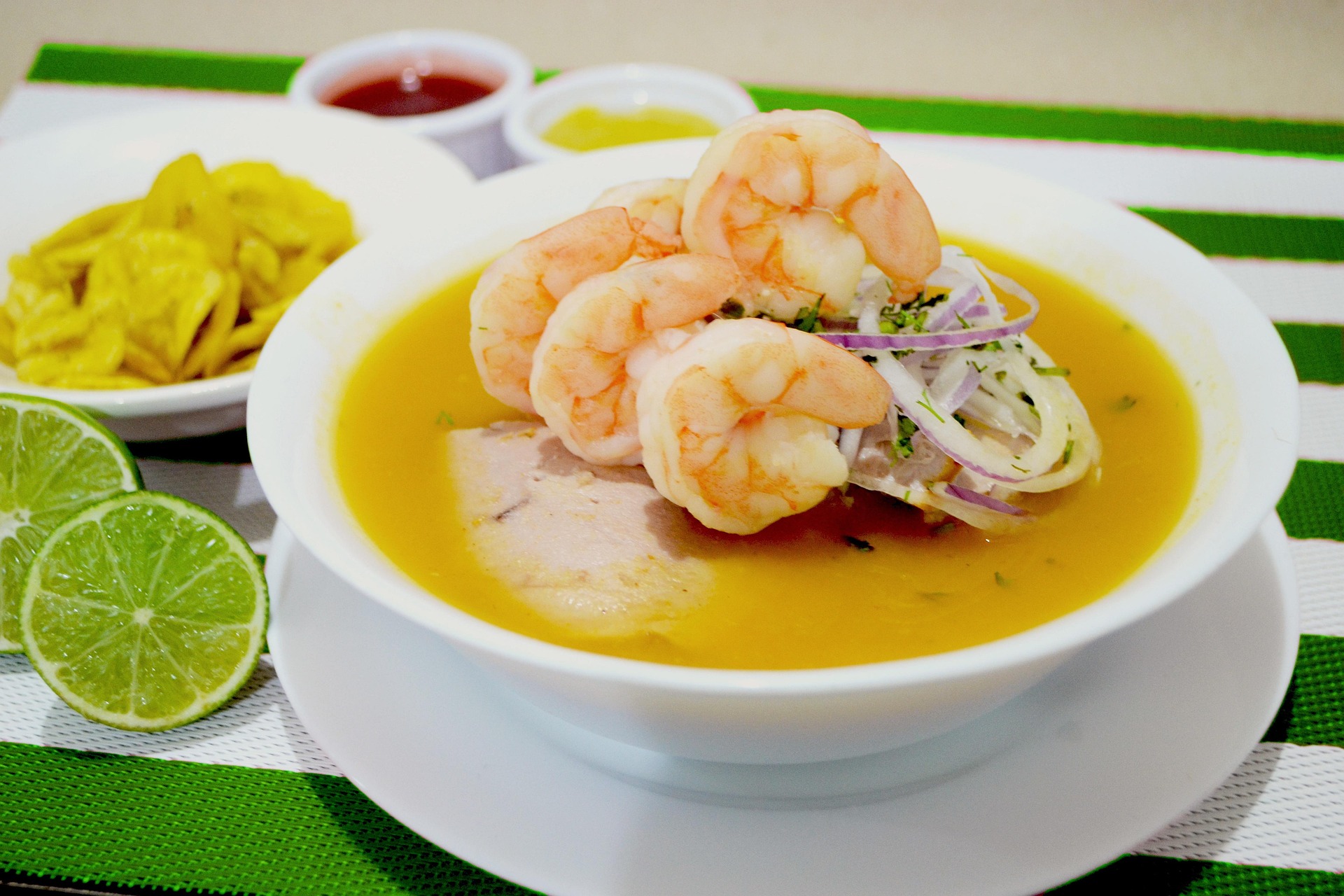
If you search the internet for a Ceviche recipe, you will inevitably stumble upon a piece of advice so fundamentally flawed that it has ruined millions of dinners: “Marinate the fish in lime juice in the refrigerator for four hours, or preferably overnight.”
If you do this, you are not making Ceviche. You are committing a culinary crime against a beautiful piece of seafood. When you leave delicate, translucent fish sitting in a pool of aggressive citric acid for hours, the acid completely ravages the flesh. It squeezes out every drop of natural moisture, turning the exterior into a chalky, fibrous paste and the interior into a dense, rubbery eraser. It becomes an unchewable, astringent disaster.
True Peruvian Ceviche is not a marinade. It is an ephemeral, fleeting chemical reaction. It is a dish of absolute immediacy, meant to be consumed within minutes of its creation. Today, we are going to travel to the coastal markets of Lima, discard the overnight myths, and learn the violent, beautiful alchemy of cold-acid cooking.
The Illusion of Cooking: The Science of Denaturation
To master Ceviche, you must first understand what is actually happening in the bowl. When you apply heat to a piece of raw fish in a frying pan, the thermal energy causes the tightly coiled proteins in the flesh to violently unwind and bond together. This process, called denaturation, changes the fish from translucent and soft to opaque and firm.
When you make Ceviche, you are achieving the exact same structural change without a single degree of heat. The harsh citric acid from the limes attacks the proteins, unraveling them chemically. The fish literally “cooks” in the cold liquid. But unlike heat, which cooks from the outside in, acid penetrates aggressively. If left too long, it doesn’t just cook the fish; it chemically mummifies it. This is why the timing of Ceviche is measured in seconds and minutes, never in hours.
The Catch: Absolute Purity and The White Flesh Rule
You cannot make world-class Ceviche with a frozen, vacuum-sealed tilapia fillet from a discount supermarket. Because the fish is not exposed to heat to kill bacteria, the freshness must be absolute. It should smell like the cold ocean breeze, not like a fish market.
You need a firm, white-fleshed saltwater fish. Sea bass, flounder, halibut, or mahi-mahi are spectacular choices. You must avoid oily, fatty fish like mackerel or bluefish, as their high fat content repels the acid and introduces an overwhelming fishy flavor that destroys the balance of the dish. While some modern Nikkei (Japanese-Peruvian) variations use salmon or tuna, the traditional purist demands stark, white flesh.
Take a razor-sharp knife and cut the fish into uniform, one-inch cubes. If the pieces are uneven, they will “cook” at drastically different rates—leaving some pieces raw and mushy while others become chalky. Place the pristine cubes in a glass bowl sitting over a bed of ice. The fish must remain aggressively cold at all times.
The Elixir of the Gods: Engineering the “Leche de Tigre”
This is the great secret of Peruvian kitchens. You do not just squeeze raw limes over the fish and walk away. You must engineer the Leche de Tigre (Tiger’s Milk)—the potent, milky, spicy, and deeply savory curing liquid that forms the soul of the dish.
Take your fish trimmings (the odd-shaped pieces you didn’t cube) and throw them into a blender. Add a handful of fresh cilantro stems, a knob of peeled ginger, two cloves of garlic, a stick of celery, and a heavy pinch of sea salt. Now, add the acid. You must use fresh, hand-squeezed limes, but here is the critical rule: do not squeeze the limes completely dry. The bitter essential oils live in the white pith of the lime skin. If you squeeze too hard, those bitter oils will bleed into your juice and ruin the sauce. Squeeze them gently, extracting only the sweetest, purest juice.
Finally, add the heat. The traditional choice is the Aji Amarillo (a bright yellow, fruity Peruvian chili) or the fiery red Rocoto pepper. If you cannot find them, a fresh habanero will provide the necessary fruity heat. Blend this entire mixture until it liquefies, then pass it through a fine-mesh sieve. What you are left with is a highly concentrated, spicy, acidic, umami-rich elixir. It looks like thin, green-tinted milk. This is your Tiger’s Milk.
The Ice Bath and The Onion Squeeze
Before the final assembly, we must address the red onion. Raw red onion is notoriously harsh and sulfurous; it will easily overpower the delicate fish. You must slice the red onion as thinly as humanly possible—so thin you can read a newspaper through it. Place the sliced onions in a bowl of heavily iced water for ten minutes. The freezing water shocks the onions, rendering them incredibly crisp while leaching out all the harsh, stinging sulfur compounds. Drain them thoroughly before use.
The Golden Window: The 3-Minute Assembly
You have your cold, cubed fish. You have your crisp onions. You have your Leche de Tigre. It is time for the final alchemy.
First, sprinkle a generous amount of coarse sea salt directly onto the naked fish cubes and toss them gently. The salt acts as an abrasive, opening the microscopic pores of the fish flesh, preparing it to drink the acid.
Now, pour the cold Leche de Tigre over the fish. Fold it gently with a spoon. You will immediately see the magic happen. Within thirty seconds, the edges of the translucent cubes will turn stark, milky white. Add your crisp red onions and a handful of freshly chopped cilantro leaves.
Start a timer. You have exactly three to five minutes.
During this golden window, the exterior of the fish becomes firm and opaque, cured by the acid and flavored by the ginger and chili. But the very center of the cube remains slightly translucent, incredibly tender, and bursting with the sweet, natural flavor of the raw ocean.
The Contrast: Taming the Tiger
Serve it immediately in a chilled bowl. But you cannot serve Ceviche alone; the acid is too aggressive. It demands the traditional Peruvian bodyguards to provide textural and thermal contrast.
Place a thick slice of cold, boiled sweet potato (camote) on the edge of the bowl—its dense, sugary starch acts as a fire blanket against the chili and acid. Add a handful of Choclo (massive, chewy, starchy Andean corn kernels) and a sprinkle of Cancha (toasted, crunchy corn) for a violent, shattered texture.
When you take a bite, the temperature, the aggressive lime, the fruity heat of the chili, and the tender, perfectly cured fish will explode across your palate. And when the fish is gone, you lift the bowl to your lips and drink the remaining Leche de Tigre straight. It is a jolt of pure, electrified energy. You haven’t just made dinner; you have captured lightning in a bowl.