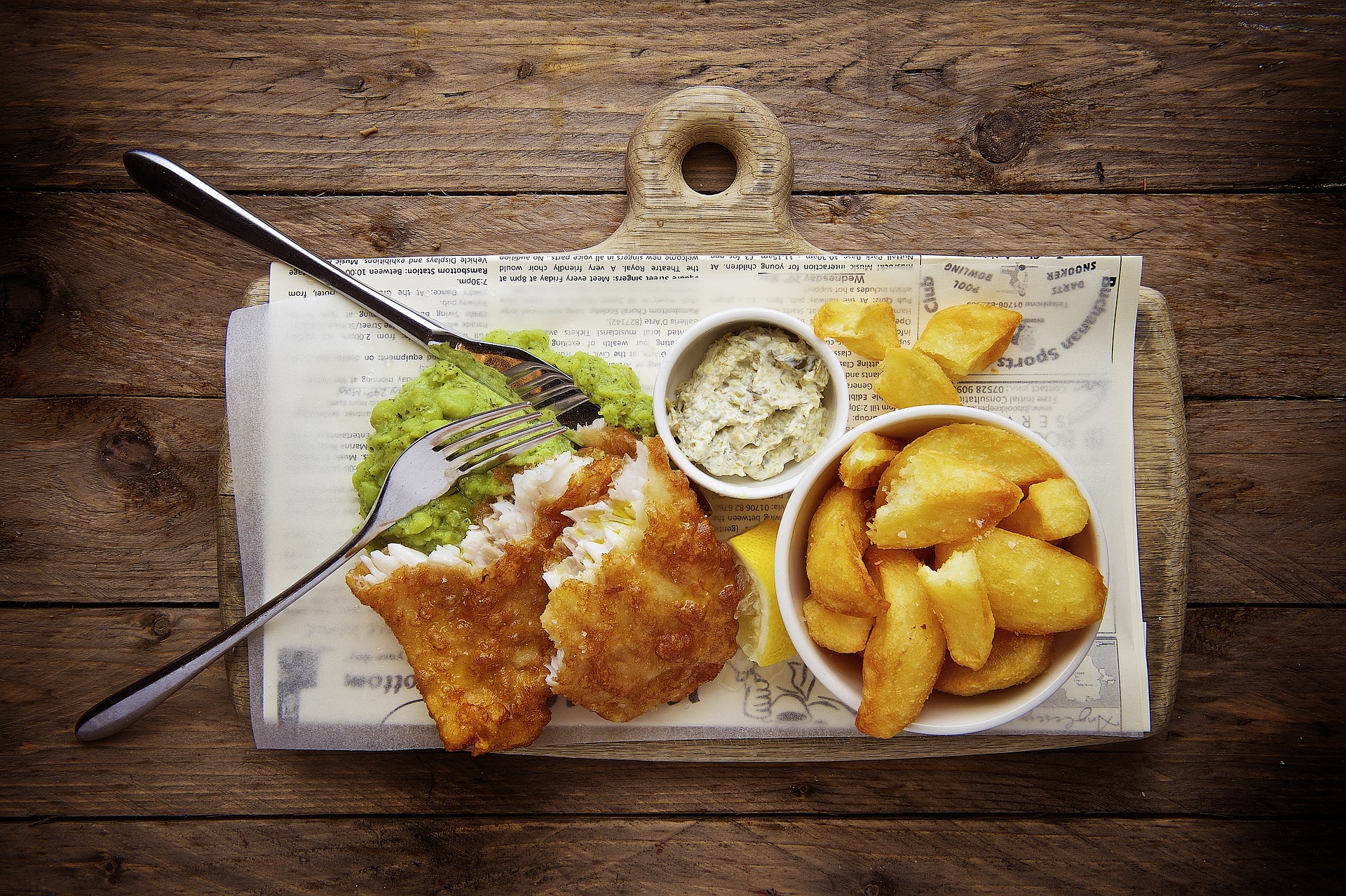
If you have ever ordered Fish and Chips at a random pub outside of the United Kingdom, I can almost guarantee you were served a tragedy. You probably received a thin, sad piece of white fish encased in a heavy, greasy armor of dough, sitting next to a pile of limp, frozen French fries.
Authentic British Fish and Chips—the kind you eat on a freezing, wind-whipped pier in Cornwall while aggressively guarding your food from seagulls—is a culinary masterpiece. It is a dish built on contrasts: the violent crunch of the batter giving way to snow-white, steaming, flaky fish; the blistering hot, golden exterior of the chip hiding a center as fluffy as a baked potato.
Achieving this at home is not about following a strict recipe. It is about understanding the aggressive physics of deep-frying. Today, we are going to deconstruct the plate into its two essential halves. We are ditching the frozen fries, cracking open a cold beer, and mastering the ultimate fry.
Part I: The Anatomy of the Proper British Chip
Let us get one thing straight immediately: a chip is not a French fry. A French fry is thin, crispy all the way through, and exists primarily as a vehicle for ketchup. A proper British chip is thick, structural, and acts like a sponge for malt vinegar.
The Potato Selection:
You cannot use waxy potatoes (like red or new potatoes) for this. They will not crisp up. You need a high-starch potato. In the UK, they use Maris Pipers. If you cannot find those, large Russet potatoes are your best friend.
The Double-Fry Doctrine:
If you throw raw potatoes into hot oil, the outside will burn black before the inside is cooked. The secret to the perfect chip is the double-fry method.
- The Blanch (130°C / 260°F): Cut your potatoes into thick batons (about the thickness of your index finger). Rinse them in cold water to remove surface starch, then dry them completely. Submerge them in oil at a relatively low temperature for about 8 to 10 minutes. They shouldn’t turn brown at all. You are just gently boiling them in oil until they are soft enough to easily pierce with a knife. Remove them and let them cool on a wire rack. They will look pale and entirely unappetizing. Trust the process.
- The Crisp (190°C / 375°F): Right before you are ready to serve, you crank the heat of your oil up. Drop the rested, blanched chips back in for just 3 to 4 minutes. The sudden shock of high heat instantly crystallizes the exterior into a golden, glass-like crust, while the inside remains pillowy and soft.
Part II: The Fish and the Beer Batter Miracle
The fish is the star, but the batter is the shield. The goal is a batter so light, lacy, and crispy that it shatters loudly when you cut into it.
Choosing the Catch:
You need a thick, sturdy white fish. Cod and Haddock are the undisputed kings of the British chippy. The fillets should be thick enough to withstand the violent heat of the oil without disintegrating. Pat your fish fillets aggressively dry with paper towels. Any surface moisture will cause the batter to slide right off in the fryer. Lightly dredge the dry fillets in plain flour, dusting off the excess. This creates a microscopic primer layer for the wet batter to grip onto.
The Chemistry of the Batter:
The worst batters are made with water, milk, or eggs. They create a dense, bread-like coating. The secret to a shattering crust relies on two things: carbonation and thermal shock.
In a bowl, mix all-purpose flour, a spoonful of rice flour (which fries up much crispier than wheat flour), and a teaspoon of baking powder. Now, open a bottle of dark beer. A British ale or a stout works beautifully, imparting a deep, malty flavor.
The Golden Rule: The beer must be ice-cold. Keep it in the freezer for 20 minutes before you open it.
When you whisk the freezing cold beer into the dry ingredients, do not overmix. Lumps are perfectly fine. If you overmix, you develop gluten, which makes the batter chewy.
The Thermal Shock (The Fry):
When the freezing cold, highly carbonated batter hits the screaming hot oil (190°C / 375°F), the temperature difference causes an explosive reaction. The carbonation from the beer and the baking powder violently expands, creating thousands of microscopic bubbles in the batter before the heat sets the flour. This is what creates that incredibly light, craggy, coral-reef-like texture on the outside of the fish.
The Technique: “The Swim”
Do not just drop the battered fish into the fryer. It will sink to the bottom like a stone, stick to the basket, and tear the batter off.
Instead, hold the fish by the very tip of its tail. Dip it into your cold beer batter, letting the excess drip off. Now, gently lower the bottom half of the fillet into the hot oil. Do not let go. Move it back and forth in the oil for about 3 seconds. You are letting the hot oil instantly seal and fry the bottom crust so it acts as a little boat. Once it feels somewhat buoyant, release the tail. It will float beautifully on the surface, bubbling aggressively.
Fry for about 5 to 7 minutes, flipping once, until it looks like a piece of rough, golden amber.
The Final Assembly: Respecting the Tradition
When you pull the fish and the chips from the oil, they must go onto a wire cooling rack, not paper towels. Paper towels trap steam, and steam is the ultimate enemy of a crispy crust.
Now, listen carefully. Do not ruin this masterpiece with sweet tomato ketchup. To eat this correctly, you must douse the chips—and lightly sprinkle the fish—with genuine malt vinegar. The sharp, malty acidity cuts straight through the richness of the fried oil, waking up your entire palate. Finish with a heavy shower of flaky sea salt.
Serve it immediately. Wrap it in a newspaper if you want the full nostalgic aesthetic, but whatever you do, eat it while it’s hot, loud, and incredibly crisp.