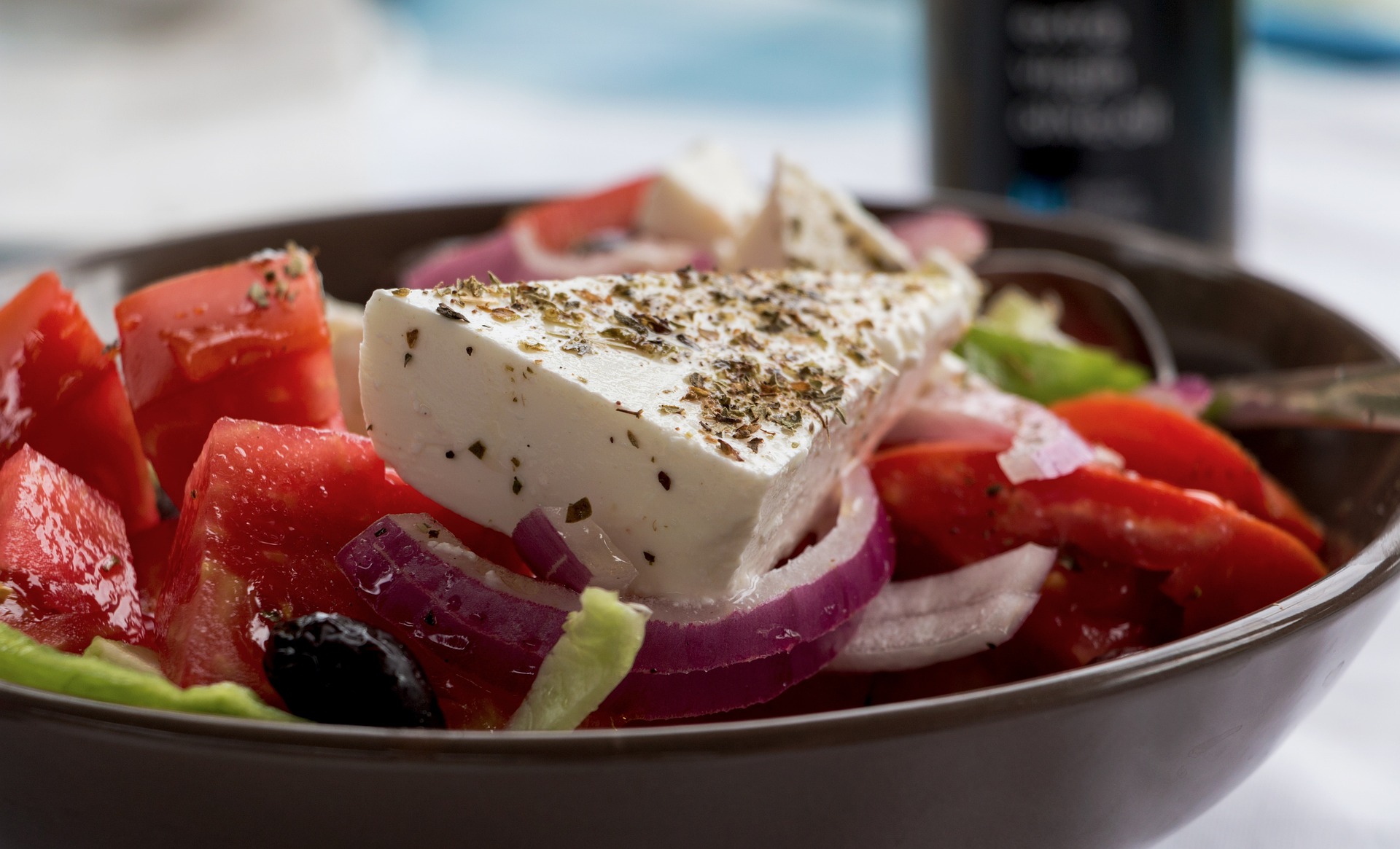
If you order a “Greek Salad” in most restaurants outside of the Mediterranean—whether in a diner in New York or a pub in London—you will likely receive a tragic, confused bowl of wet iceberg lettuce. It will be padded with a few pale, out-of-season hotbed tomatoes, littered with rubbery black rings that once resembled olives, and finished with powdery, pre-crumbled feta cheese dusted over the top like sad, salty snow. It is a dish built on compromise and cost-cutting, bearing absolutely no resemblance to its namesake.
When I finally sat down at a small, sun-bleached taverna in Athens overlooking the Aegean Sea, I ordered a traditional Horiatiki (which translates literally to “Village Salad”), and my entire understanding of Mediterranean food was violently and beautifully rewritten. When the bowl arrived at the table, there was absolutely no lettuce. None. Zero. It is a fundamental rule of Greek culinary tradition that the rest of the world has somehow collectively ignored.
A true Greek salad is not about hiding cheap vegetables under a mountain of leafy greens to create false volume. It is a raw, naked celebration of high-summer produce, aggressive geometry, and the sheer, unadulterated power of premium olive oil. It demands flawless ingredients because there is nowhere for bad produce to hide. Today, we are going to fix your salad, and more importantly, we are going to fix the watery, diluted disaster that most people attempt to pass off as Tzatziki.
The Horiatiki Masterclass: The Absolute Prohibition of Lettuce
To build a proper Village Salad, you must treat your vegetables with profound respect. You are not finely dicing them into a salsa; you are performing a rustic, deliberate chop. The geometry matters.
You must start with aggressively red, sun-ripened tomatoes. If your tomatoes have been kept in a refrigerator and feel hard to the touch, do not make this salad. You need tomatoes that yield slightly to pressure, bursting with natural sugars and umami. Cut them into massive, irregular wedges.
Next comes the cucumber. Peel it completely, or leave stripes of dark green skin for texture, but you must slice it into thick, confident half-moons. If the cucumber is particularly watery, scoop out the seeds so they do not dilute the dressing.
Then, the allium bite. You need sharp, crisp rings of red onion. If raw onion is too aggressive for your palate, do not leave it out. Instead, soak the onion rings in a splash of red wine vinegar for ten minutes before adding them to the bowl. The acid will neutralize the harsh sulfur compounds, leaving you with a sweet, pickled crunch that cuts through the richness of the cheese.
Finally, toss in a generous handful of Kalamata olives. You must leave the pits in them. Serving pitted olives in a Horiatiki is considered a culinary shortcut that ruins the pacing of the meal. The pits force you to eat slowly, to navigate the bowl with intention, and to actually converse with the people sitting across from you.
The Crowning Glory: Feta and Liquid Gold
This brings us to the cheese. Never, under any circumstances, buy pre-crumbled feta in a plastic tub. Commercially crumbled feta is coated in anti-caking agents like cellulose to stop the pieces from sticking together. This chemical dusting ruins the texture, preventing the cheese from melting on your tongue and leaving a chalky residue behind.
You must buy a massive, solid block of authentic Greek feta—preferably made from a blend of sheep and goat’s milk—resting in its natural saltwater brine. Sheep’s milk provides a sharp, tangy, grassy flavor that cow’s milk simply cannot replicate. You do not crumble this beautiful block; you take a massive, heavy slab of it and lay it directly across the top of the vegetables like a proud, stark white monolith.
The dressing is an exercise in absolute restraint. There are no complex emulsified vinaigrettes or mustard binders. You simply drown the entire bowl in the best extra virgin olive oil you can afford. It should be cold-pressed, vibrant green, and slightly peppery in the back of your throat. Splash a small amount of sharp red wine vinegar over the tomatoes, and crush a heavy pinch of dried wild oregano between your fingers, letting it fall over the block of feta.
That is it. As the salad sits, the acidic juice from the ripe tomatoes will slowly bleed into the heavy olive oil at the bottom of the bowl. This creates a magical, natural dressing. In Greece, soaking up this tomato-infused oil with a piece of crusty bread is a ritual so revered that they have a specific word for it: papara. It is practically a religious experience.
The Tzatziki Trap: Conquering the Moisture Enemy
Alongside your flawless salad, you need Tzatziki. A truly great Tzatziki sauce should be thick enough to stand a metal spoon straight up in it. It should be rich, velvety, violently garlicky, and deeply refreshing. Yet, most home cooks end up with a milky, thin soup that separates on the plate.
The culprit behind this tragedy is the cucumber. Cucumbers are over 95% water. If you simply grate a raw cucumber and fold it directly into a bowl of yogurt, that water will slowly bleed out over the next hour, completely destroying the structural integrity of your sauce and diluting the dairy. You have to aggressively extract the water before it ruins your dish.
The Osmosis Extraction Technique
Take an entire English cucumber (they have fewer seeds and thinner skins) and grate it on the coarse side of a metal box grater. Place the wet, green shreds into a fine-mesh sieve set over a mixing bowl, and toss them generously with kosher salt. Now, you wait. The salt will instantly go to work on a cellular level, breaking down the cell walls of the cucumber and pulling the liquid to the surface through the process of osmosis.
After twenty minutes, you will see a large puddle of green, grassy water in the bowl below. But gravity is not enough; you are not done. Take a clean kitchen towel or a double layer of cheesecloth, pile the salted cucumber shreds into the center, twist the cloth into a tight bundle, and squeeze with all your grip strength. Squeeze until your knuckles turn white. You will be absolutely shocked by how much additional liquid comes pouring out of the bundle. What you are left with inside the towel is a dry, highly concentrated ball of pure cucumber essence.
The Alchemy of Dairy and Garlic
Now, and only now, can you build the sauce. You must use full-fat, strained Greek yogurt. If you use regular, unstrained yogurt, it will be a watery disaster regardless of what you did to the cucumber. Fold your dry, shredded cucumber into the thick, luxurious yogurt.
Next comes the garlic. You do not want heavy chunks of raw garlic ruining the velvety texture of the dip. Instead, use a microplane to grate two cloves of fresh garlic directly into the bowl. Grating it turns the garlic into a fine, wet paste, rapidly releasing a compound called allicin, which provides that signature spicy punch. This paste melts seamlessly into the fat of the yogurt without leaving any harsh pieces to bite into.
Add a squeeze of fresh lemon juice to brighten the heavy dairy, a tablespoon of high-quality olive oil for a luxurious, silky mouthfeel, and a generous handful of finely minced fresh dill. (Some regions prefer mint, but dill provides a savory earthiness that pairs flawlessly with grilled meats).
The Marriage of Flavors
Just like a slow-cooked stew, Tzatziki cannot be eaten immediately after mixing. The harsh, fiery bite of the raw grated garlic needs time to mellow, soften, and infuse into the fat molecules of the yogurt. Cover the bowl tightly and let it rest in the refrigerator for at least two hours—though overnight is even better.
When you finally pull it out of the fridge and serve it alongside that vibrant, lettuce-free Horiatiki salad and a towering stack of blistered, warm pita bread straight from the grill, you are not just eating a standard weeknight meal. You are consuming the very soul of the Mediterranean summer, engineered perfectly in your own kitchen.