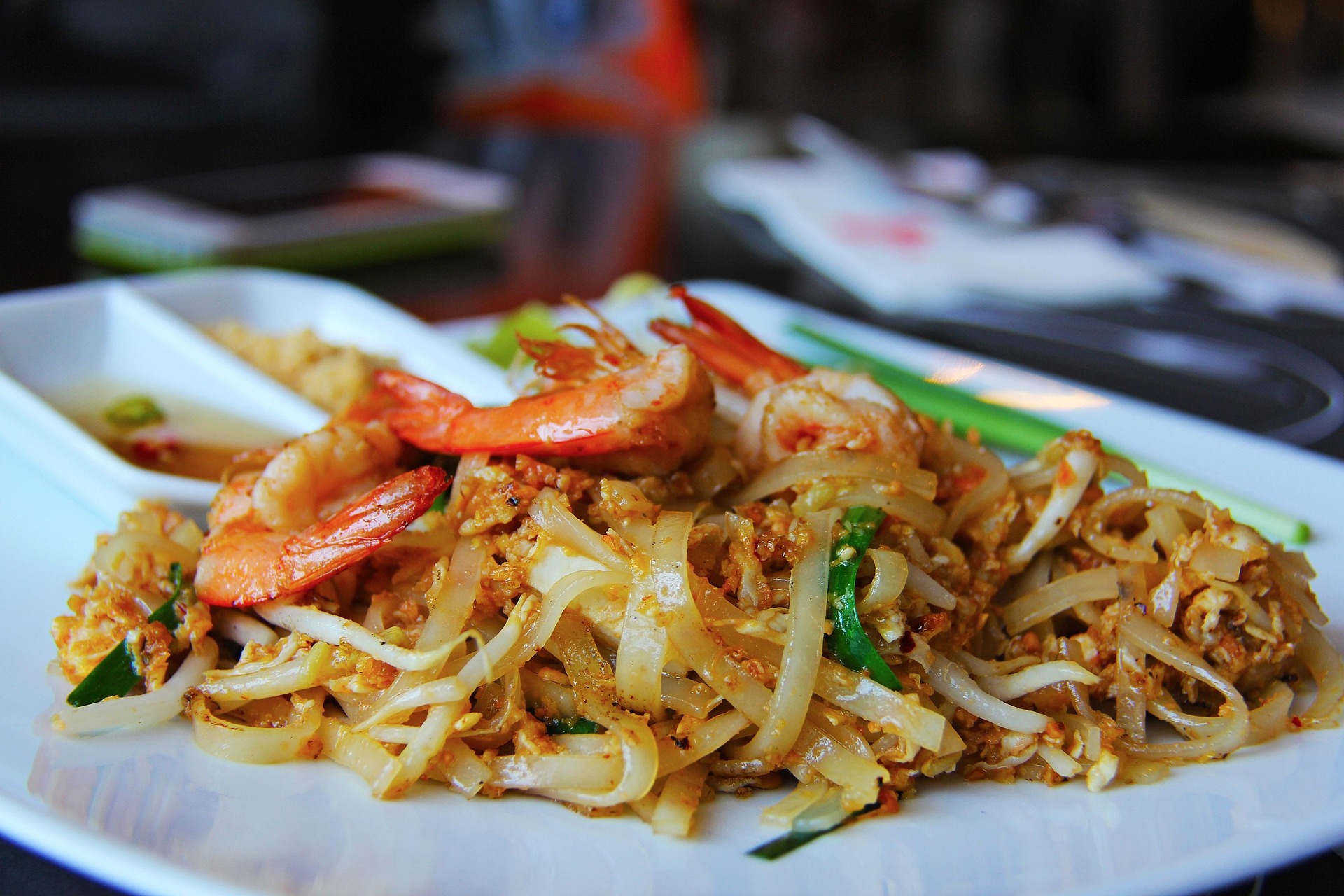
If you have grown up ordering Pad Thai from standard suburban takeout restaurants across Europe or America, I need to break some difficult news to you: you have probably never eaten real Pad Thai.
What usually arrives in those little white cardboard boxes is a glowing orange, overly sweet, sticky mound of mushy noodles. It tastes vaguely of peanut butter and is often dyed red with—and I shudder to even type this—ketchup. It is a culinary tragedy designed for a heavily westernized palate, built on cheap shortcuts and completely devoid of the complex, sharp, and funky balance that defines authentic Thai street food.
Real Pad Thai, the kind you eat while sitting on a plastic stool in the sweltering heat of a Bangkok night market, is a revelation. It is an intricate, lightning-fast dance of sweet, sour, and salty flavors, bound together by the intense, smoky breath of a screaming hot wok. Today, we are staging an intervention. We are throwing away the peanut butter, banning the ketchup, and learning how to engineer an authentic Pad Thai in your own kitchen.
The Holy Trinity of the Sauce (No Ketchup Allowed)
The soul of Pad Thai lives entirely in its sauce. It relies on a perfect, three-way equilibrium between sour, sweet, and salty. If one element overpowers the others, the entire dish collapses.
The Sour: The backbone of the sauce is tamarind. Specifically, you need tamarind concentrate or paste made from compressed tamarind pulp and warm water. It provides a deep, fruity, earthy tartness that synthetic vinegar or lime juice simply cannot replicate. If your recipe calls for ketchup or rice vinegar as the primary acid, throw the recipe away immediately.
The Sweet: White sugar will make the sauce taste flat and purely sugary. You must use Thai palm sugar. It comes in hard, golden discs and needs to be shaved down with a knife. When melted into the tamarind, palm sugar offers a complex, caramel-like sweetness with subtle notes of butterscotch and smoke.
The Salty and Funky: This is where the magic happens. You need premium fish sauce (Nam Pla). Yes, it smells incredibly pungent straight out of the bottle, but when it hits the hot wok and reduces with the tamarind and palm sugar, that harsh fishy smell vanishes. It leaves behind a massive wave of savory umami that anchors the entire dish.
Simmer these three ingredients together in a saucepan until they form a dark, glossy syrup. That is your authentic Pad Thai sauce. It should punch you in the mouth with sharpness, follow up with a deep caramel sweetness, and finish with a rich, savory saltiness.
The Hydration Trap: Never Boil Your Noodles
The second biggest mistake home cooks make is treating rice noodles like Italian pasta. If you drop flat rice noodles into a pot of boiling water, they will cook in three minutes. But when you transfer those boiled noodles into a hot wok and add sauce, they will instantly disintegrate into a starchy, gelatinous paste.
You must soak the dry rice noodles in room-temperature water for about 45 to 60 minutes. When you pull them out, they should be pliable and completely opaque, but still completely raw and unyielding to the bite. They will finish cooking directly in the wok, absorbing the tamarind sauce and the juices from the pan instead of just absorbing plain water. This is the only way to achieve that signature, chewy, separate noodle texture.
The Non-Negotiable Aromatics
A chicken breast and some scrambled eggs are not enough. Authentic Pad Thai builds its flavor profile using a very specific cast of aromatic characters that you must source from an Asian grocery store.
You need finely minced garlic and shallots for the base. You need sweet preserved daikon radish (Chai Po), which adds tiny, unexpected bursts of salty-sweet crunch. You need dried shrimp, pulverized slightly, to amplify the oceanic umami of the fish sauce. And you need pressed, extra-firm tofu cut into matchsticks—not soft tofu, which will shatter in the pan, but the dense, yellow-skinned tofu that can withstand the violent tossing of the wok.
The Mechanics of “Wok Hei” (The Breath of the Wok)
You cannot cook four portions of Pad Thai at once. If you crowd the pan, the temperature of the metal will plummet. Your noodles will boil in their own steam rather than fry, resulting in a wet, heavy mess. You must cook this dish one, or at most two, portions at a time.
Get your carbon steel wok or your widest, heaviest skillet smoking hot. Add a high smoke-point oil. Sear your protein (shrimp or thin slices of pork) quickly, then remove it. Toss in your tofu, shallots, garlic, dried shrimp, and preserved radish. Toss them vigorously until the garlic is golden.
Now, drop in your soaked, drained noodles and immediately ladle in your dark tamarind sauce. The pan should hiss violently. Toss the noodles continuously. You will watch them transform from opaque white to a beautiful, translucent, glossy brown as they absorb the liquid and fry in the oil.
Push the noodles to one side of the wok, add a tiny drop of oil to the empty space, and crack in an egg. Scramble it aggressively until it is just barely set, then fold the hot noodles over the egg to integrate it. Toss in a massive handful of fresh garlic chives (or green onions) and fresh bean sprouts. Turn off the heat immediately. You want the sprouts to remain crisp and raw to provide a textural contrast to the chewy noodles.
The Final Garnish
Serve it immediately. The peanuts—which are the only peanuts allowed in this dish—should be unsalted, freshly roasted, heavily crushed, and served strictly as a garnish on the side, alongside a wedge of fresh lime and a pinch of roasted chili flakes.
When you mix that fresh lime juice into the smoky, tamarind-soaked noodles and take a bite, you will instantly realize that you have been lied to your entire life. Authentic Pad Thai is not a fast-food sugar rush; it is a masterpiece of balance, and you just built it from scratch.